


Filter by Brand





Top rated products
Argodiode 100-3AC 3 batteries 100A Retail
د.إ250.00Diode Battery Isolators allow simultaneous charging of two or more batteries from one alternator, without connecting the batteries together. Discharging the accessory battery for example will not result in also discharging the starter battery. Low voltage drop due to the use of high efficiency Schottky diodes.
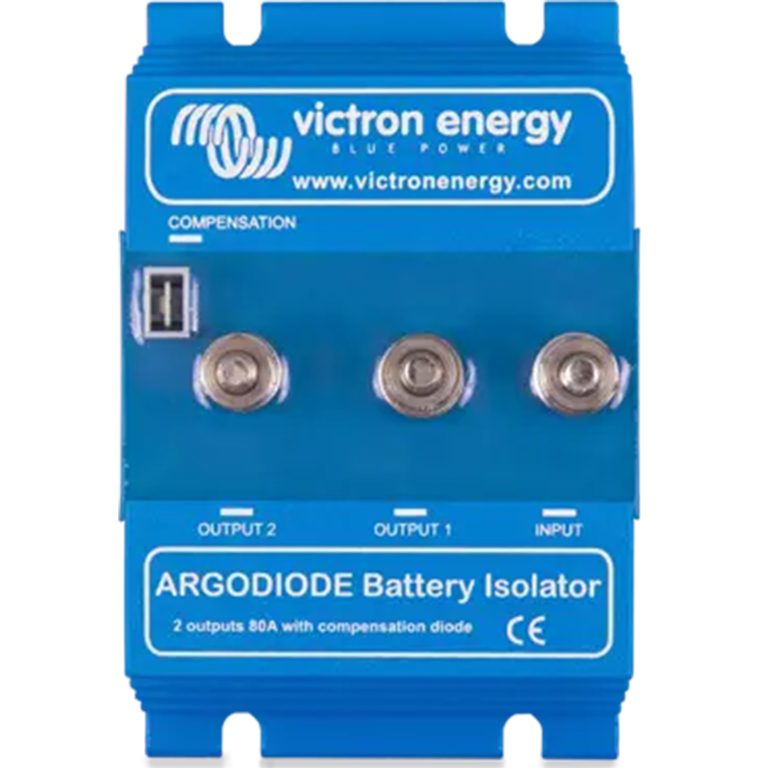
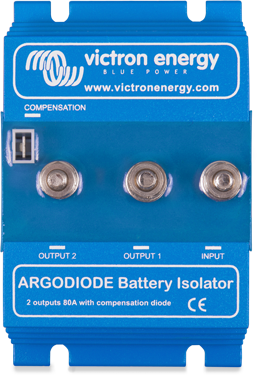
Argodiode 80-2AC 2 batteries 80A
د.إ190.00Diode Battery Isolators allow simultaneous charging of two or more batteries from one alternator, without connecting the batteries together. Discharging the accessory battery for example will not result in also discharging the starter battery. Low voltage drop due to the use of high efficiency Schottky diodes.
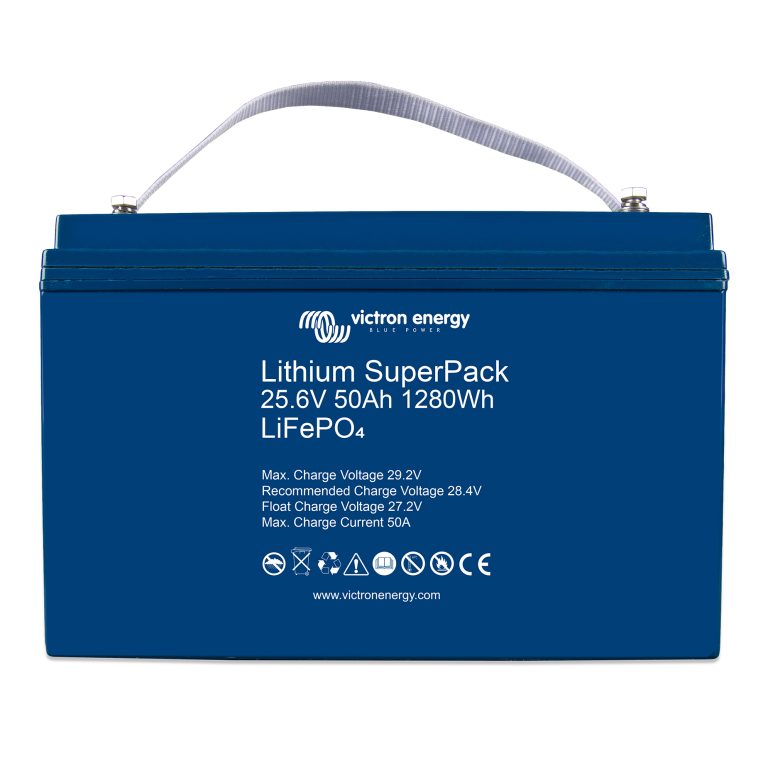
Lithium SuperPack 25,6V/50Ah (M8)
The SuperPack batteries are extremely easy to install, not needing any additional components.
The internal switch will disconnect the battery in case of over discharge, over charge or high temperature.The batteries can be connected in parallel. Series connection is not allowed. Abuse proof :
A lead-acid battery will fail prematurely due to sulfation:
• If it operates in deficit mode during long periods of time (i.e. if the battery is rarely, or never at all, fully charged).
• If it is left partially charged or worse, fully discharged.
A Lithium-Ion battery does not need to be fully charged. Service life even slightly improves in case of partial charge instead of a full charge. This
is a major advantage of Li-ion compared to lead-acid.
The SuperPack batteries will cut-off the charge or discharge current when the maximum ratings are exceeded.
Efficient :
In several applications (especially off-grid solar), energy efficiency can be of crucial importance.
The round-trip energy efficiency (discharge from 100 % to 0 % and back to 100 % charged) of the average lead-acid battery is 80 % .
The round-trip energy efficiency of a Li-ion battery is 92 % .
The charge process of lead-acid batteries becomes particularly inefficient when the 80 % state of charge has been reached, resulting in
efficiencies of 50 % or even less in solar systems where several days of reserve energy are required (battery operating in 70 % to 100 % charged
state).
In contrast, a Li-ion battery will still achieve 90 % efficiency even under shallow discharge conditions.
The batteries can be connected in parallel. Series connection is not allowed.
Use in upright position only.
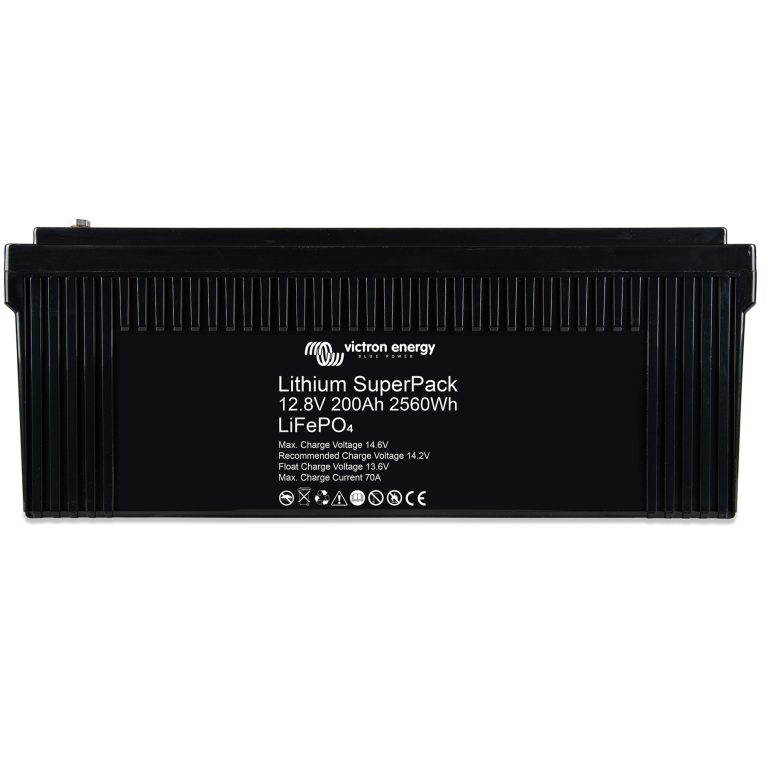
Lithium SuperPack 12,8V/200Ah (M8)
The SuperPack batteries are extremely easy to install, not needing any additional components.
The internal switch will disconnect the battery in case of over discharge, over charge or high temperature.The batteries can be connected in parallel. Series connection is not allowed. Abuse proof :
A lead-acid battery will fail prematurely due to sulfation:
• If it operates in deficit mode during long periods of time (i.e. if the battery is rarely, or never at all, fully charged).
• If it is left partially charged or worse, fully discharged.
A Lithium-Ion battery does not need to be fully charged. Service life even slightly improves in case of partial charge instead of a full charge. This
is a major advantage of Li-ion compared to lead-acid.
The SuperPack batteries will cut-off the charge or discharge current when the maximum ratings are exceeded.
Efficient :
In several applications (especially off-grid solar), energy efficiency can be of crucial importance.
The round-trip energy efficiency (discharge from 100 % to 0 % and back to 100 % charged) of the average lead-acid battery is 80 % .
The round-trip energy efficiency of a Li-ion battery is 92 % .
The charge process of lead-acid batteries becomes particularly inefficient when the 80 % state of charge has been reached, resulting in
efficiencies of 50 % or even less in solar systems where several days of reserve energy are required (battery operating in 70 % to 100 % charged
state).
In contrast, a Li-ion battery will still achieve 90 % efficiency even under shallow discharge conditions.
The batteries can be connected in parallel. Series connection is not allowed.
Use in upright position only.
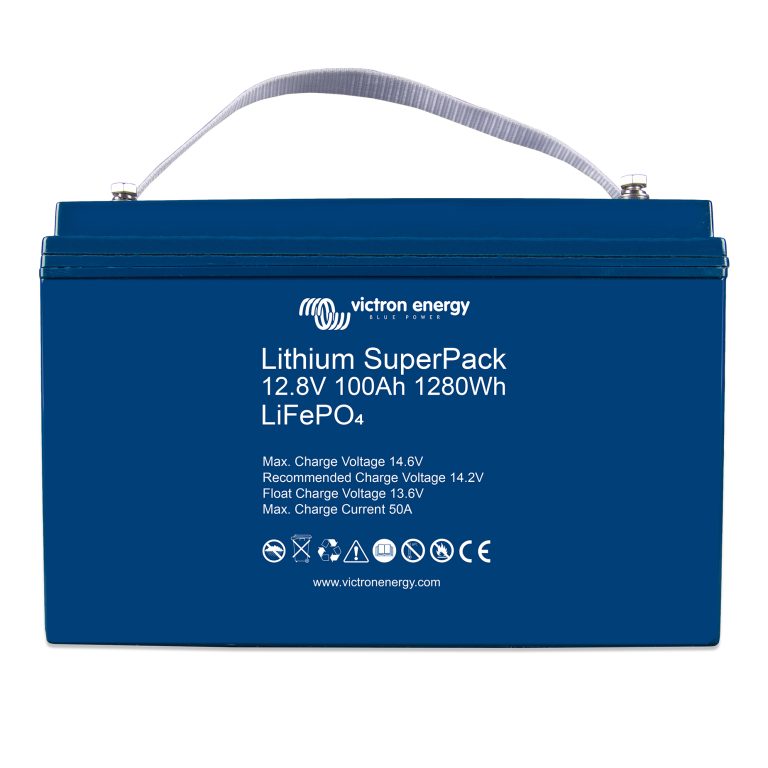
Lithium SuperPack 12,8V/100Ah High current (M8)
The SuperPack batteries are extremely easy to install, not needing any additional components.
The internal switch will disconnect the battery in case of over discharge, over charge or high temperature.The batteries can be connected in parallel. Series connection is not allowed. Abuse proof :
A lead-acid battery will fail prematurely due to sulfation:
• If it operates in deficit mode during long periods of time (i.e. if the battery is rarely, or never at all, fully charged).
• If it is left partially charged or worse, fully discharged.
A Lithium-Ion battery does not need to be fully charged. Service life even slightly improves in case of partial charge instead of a full charge. This
is a major advantage of Li-ion compared to lead-acid.
The SuperPack batteries will cut-off the charge or discharge current when the maximum ratings are exceeded.
Efficient :
In several applications (especially off-grid solar), energy efficiency can be of crucial importance.
The round-trip energy efficiency (discharge from 100 % to 0 % and back to 100 % charged) of the average lead-acid battery is 80 % .
The round-trip energy efficiency of a Li-ion battery is 92 % .
The charge process of lead-acid batteries becomes particularly inefficient when the 80 % state of charge has been reached, resulting in
efficiencies of 50 % or even less in solar systems where several days of reserve energy are required (battery operating in 70 % to 100 % charged
state).
In contrast, a Li-ion battery will still achieve 90 % efficiency even under shallow discharge conditions.
The batteries can be connected in parallel. Series connection is not allowed.
Use in upright position only.
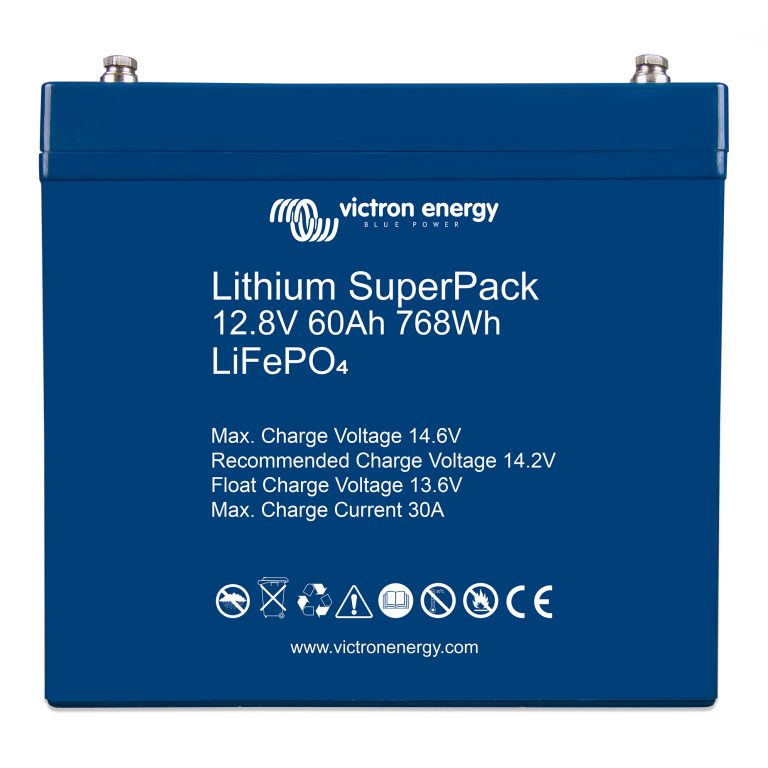
Lithium SuperPack 12,8V/60Ah (M6)
The SuperPack batteries are extremely easy to install, not needing any additional components.
The internal switch will disconnect the battery in case of over discharge, over charge or high temperature.The batteries can be connected in parallel. Series connection is not allowed. Abuse proof :
A lead-acid battery will fail prematurely due to sulfation:
• If it operates in deficit mode during long periods of time (i.e. if the battery is rarely, or never at all, fully charged).
• If it is left partially charged or worse, fully discharged.
A Lithium-Ion battery does not need to be fully charged. Service life even slightly improves in case of partial charge instead of a full charge. This
is a major advantage of Li-ion compared to lead-acid.
The SuperPack batteries will cut-off the charge or discharge current when the maximum ratings are exceeded.
Efficient :
In several applications (especially off-grid solar), energy efficiency can be of crucial importance.
The round-trip energy efficiency (discharge from 100 % to 0 % and back to 100 % charged) of the average lead-acid battery is 80 % .
The round-trip energy efficiency of a Li-ion battery is 92 % .
The charge process of lead-acid batteries becomes particularly inefficient when the 80 % state of charge has been reached, resulting in
efficiencies of 50 % or even less in solar systems where several days of reserve energy are required (battery operating in 70 % to 100 % charged
state).
In contrast, a Li-ion battery will still achieve 90 % efficiency even under shallow discharge conditions.
The batteries can be connected in parallel. Series connection is not allowed.
Use in upright position only.
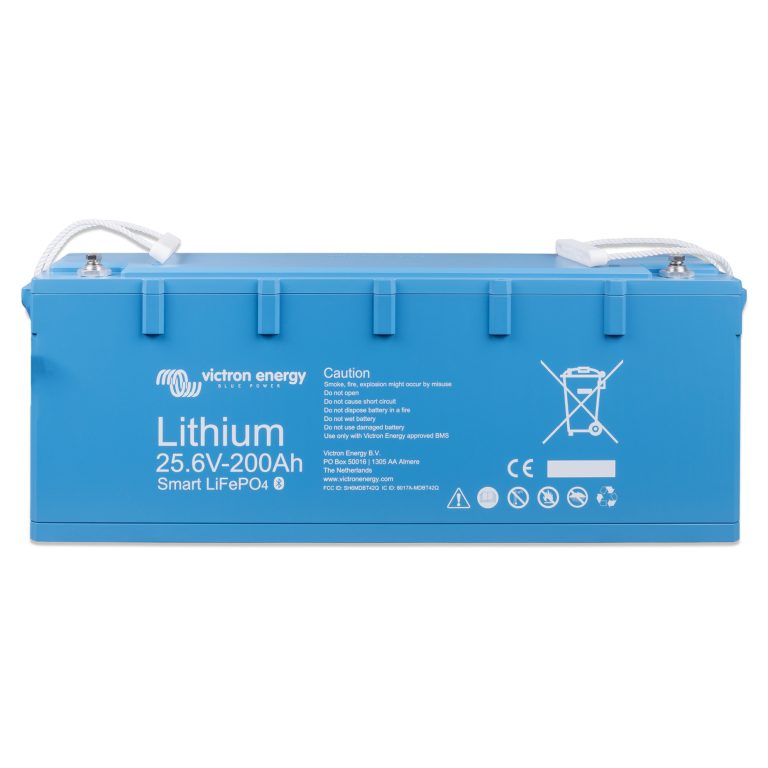
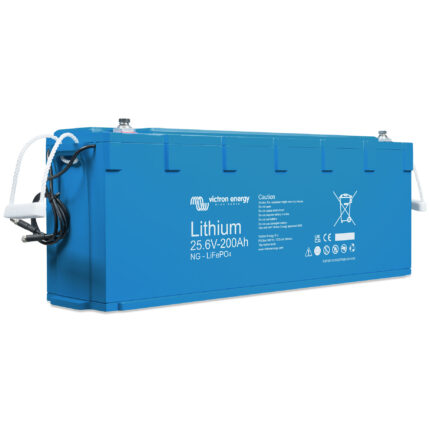
LiFePO4 Battery 25,6V/200Ah – Smart-a
Lithium-iron-phosphate (LiFePO4 or LFP) is the safest of the mainstream li-ion battery types. The nominal
voltage of a LFP cell is 3,2V (lead-acid: 2V/cell). A 12,8V LFP battery therefore consists of 4 cells connected in
series.
Rugged
A lead-acid battery will fail prematurely due to sulfation:
• If it operates in deficit mode during long periods of time (i.e. if the battery is rarely, or never at all,
fully charged).
• If it is left partially charged or worse, fully discharged (yacht or mobile home during wintertime).
A LFP battery does not need to be fully charged. Service life even slightly improves in case of partial charge
instead of a full charge. This is a major advantage of LFP compared to lead-acid.
Other advantages are the wide operating temperature range, excellent cycling performance, low internal
resistance and high efficiency . LFP is therefore the chemistry of choice for very demanding applications.
Efficient
In several applications (especially off-grid solar and/or wind), energy efficiency can be of crucial importance.
The round trip energy efficiency (discharge from 100% to 0% and back to 100% charged) of the average leadacid battery is 80%.
The round trip energy efficiency of a LFP battery is 92%.
The charge process of lead-acid batteries becomes particularly inefficient when the 80% state of charge has
been reached, resulting in efficiencies of 50% or even less in solar systems where several days of reserve energy is required (battery operating in 70% to 100% charged state).
In contrast, a LFP battery will still achieve 90% efficiency under shallow discharge conditions.
Size and weight
Saves up to 70% in space
Saves up to 70% in weight
Expensive?
LFP batteries are expensive when compared to lead-acid. But in demanding applications, the high initial cost will be more than compensated by longer service life, superior reliability and excellent efficiency.
Bluetooth
With Bluetooth cell voltages, temperature and alarm status can be monitored.
Very useful to localize a (potential) problem, such as cell imbalance.
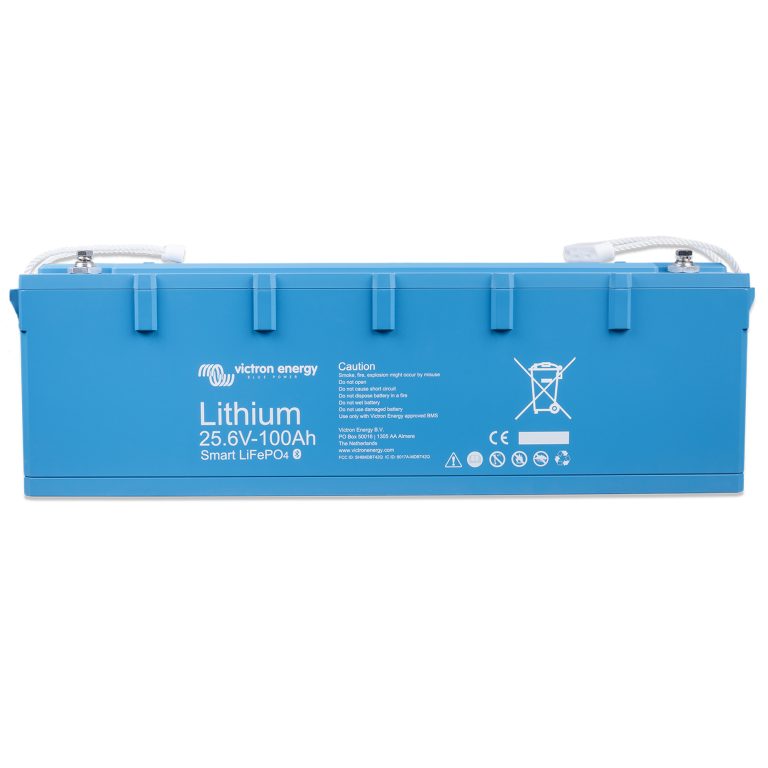
LiFePO4 Battery 25,6V/100Ah – Smart
Lithium-iron-phosphate (LiFePO4 or LFP) is the safest of the mainstream li-ion battery types. The nominal
voltage of a LFP cell is 3,2V (lead-acid: 2V/cell). A 12,8V LFP battery therefore consists of 4 cells connected in
series.
Rugged
A lead-acid battery will fail prematurely due to sulfation:
• If it operates in deficit mode during long periods of time (i.e. if the battery is rarely, or never at all,
fully charged).
• If it is left partially charged or worse, fully discharged (yacht or mobile home during wintertime).
A LFP battery does not need to be fully charged. Service life even slightly improves in case of partial charge
instead of a full charge. This is a major advantage of LFP compared to lead-acid.
Other advantages are the wide operating temperature range, excellent cycling performance, low internal
resistance and high efficiency . LFP is therefore the chemistry of choice for very demanding applications.
Efficient
In several applications (especially off-grid solar and/or wind), energy efficiency can be of crucial importance.
The round trip energy efficiency (discharge from 100% to 0% and back to 100% charged) of the average leadacid battery is 80%.
The round trip energy efficiency of a LFP battery is 92%.
The charge process of lead-acid batteries becomes particularly inefficient when the 80% state of charge has
been reached, resulting in efficiencies of 50% or even less in solar systems where several days of reserve energy is required (battery operating in 70% to 100% charged state).
In contrast, a LFP battery will still achieve 90% efficiency under shallow discharge conditions.
Size and weight
Saves up to 70% in space
Saves up to 70% in weight
Expensive?
LFP batteries are expensive when compared to lead-acid. But in demanding applications, the high initial cost will be more than compensated by longer service life, superior reliability and excellent efficiency.
Bluetooth
With Bluetooth cell voltages, temperature and alarm status can be monitored.
Very useful to localize a (potential) problem, such as cell imbalance.
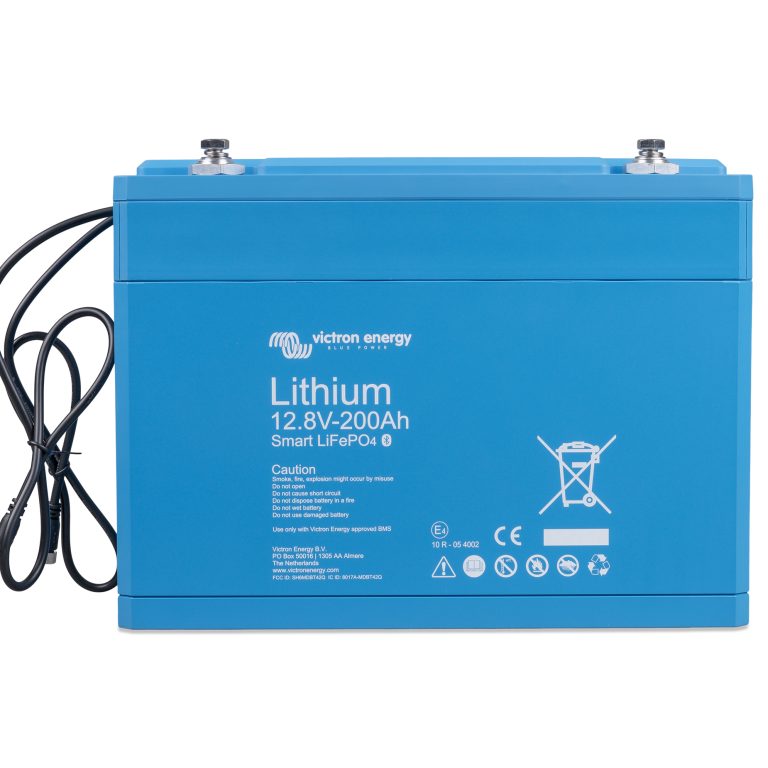
LiFePO4 Battery 12,8V/200Ah – Smart
Lithium-iron-phosphate (LiFePO4 or LFP) is the safest of the mainstream li-ion battery types. The nominal
voltage of a LFP cell is 3,2V (lead-acid: 2V/cell). A 12,8V LFP battery therefore consists of 4 cells connected in
series.
Rugged
A lead-acid battery will fail prematurely due to sulfation:
• If it operates in deficit mode during long periods of time (i.e. if the battery is rarely, or never at all,
fully charged).
• If it is left partially charged or worse, fully discharged (yacht or mobile home during wintertime).
A LFP battery does not need to be fully charged. Service life even slightly improves in case of partial charge
instead of a full charge. This is a major advantage of LFP compared to lead-acid.
Other advantages are the wide operating temperature range, excellent cycling performance, low internal
resistance and high efficiency . LFP is therefore the chemistry of choice for very demanding applications.
Efficient
In several applications (especially off-grid solar and/or wind), energy efficiency can be of crucial importance.
The round trip energy efficiency (discharge from 100% to 0% and back to 100% charged) of the average leadacid battery is 80%.
The round trip energy efficiency of a LFP battery is 92%.
The charge process of lead-acid batteries becomes particularly inefficient when the 80% state of charge has
been reached, resulting in efficiencies of 50% or even less in solar systems where several days of reserve energy is required (battery operating in 70% to 100% charged state).
In contrast, a LFP battery will still achieve 90% efficiency under shallow discharge conditions.
Size and weight
Saves up to 70% in space
Saves up to 70% in weight
Expensive?
LFP batteries are expensive when compared to lead-acid. But in demanding applications, the high initial cost will be more than compensated by longer service life, superior reliability and excellent efficiency.
Bluetooth
With Bluetooth cell voltages, temperature and alarm status can be monitored.
Very useful to localize a (potential) problem, such as cell imbalance.
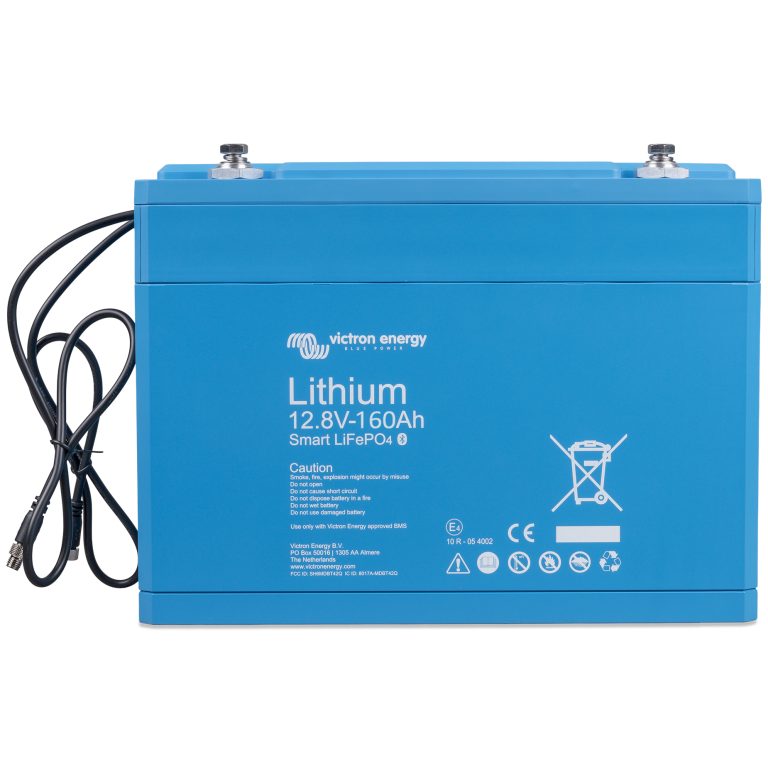
LiFePO4 battery 12,8V/160Ah – Smart
Lithium-iron-phosphate (LiFePO4 or LFP) is the safest of the mainstream li-ion battery types. The nominal
voltage of a LFP cell is 3,2V (lead-acid: 2V/cell). A 12,8V LFP battery therefore consists of 4 cells connected in
series.
Rugged
A lead-acid battery will fail prematurely due to sulfation:
• If it operates in deficit mode during long periods of time (i.e. if the battery is rarely, or never at all,
fully charged).
• If it is left partially charged or worse, fully discharged (yacht or mobile home during wintertime).
A LFP battery does not need to be fully charged. Service life even slightly improves in case of partial charge
instead of a full charge. This is a major advantage of LFP compared to lead-acid.
Other advantages are the wide operating temperature range, excellent cycling performance, low internal
resistance and high efficiency . LFP is therefore the chemistry of choice for very demanding applications.
Efficient
In several applications (especially off-grid solar and/or wind), energy efficiency can be of crucial importance.
The round trip energy efficiency (discharge from 100% to 0% and back to 100% charged) of the average leadacid battery is 80%.
The round trip energy efficiency of a LFP battery is 92%.
The charge process of lead-acid batteries becomes particularly inefficient when the 80% state of charge has
been reached, resulting in efficiencies of 50% or even less in solar systems where several days of reserve energy is required (battery operating in 70% to 100% charged state).
In contrast, a LFP battery will still achieve 90% efficiency under shallow discharge conditions.
Size and weight
Saves up to 70% in space
Saves up to 70% in weight
Expensive?
LFP batteries are expensive when compared to lead-acid. But in demanding applications, the high initial cost will be more than compensated by longer service life, superior reliability and excellent efficiency.
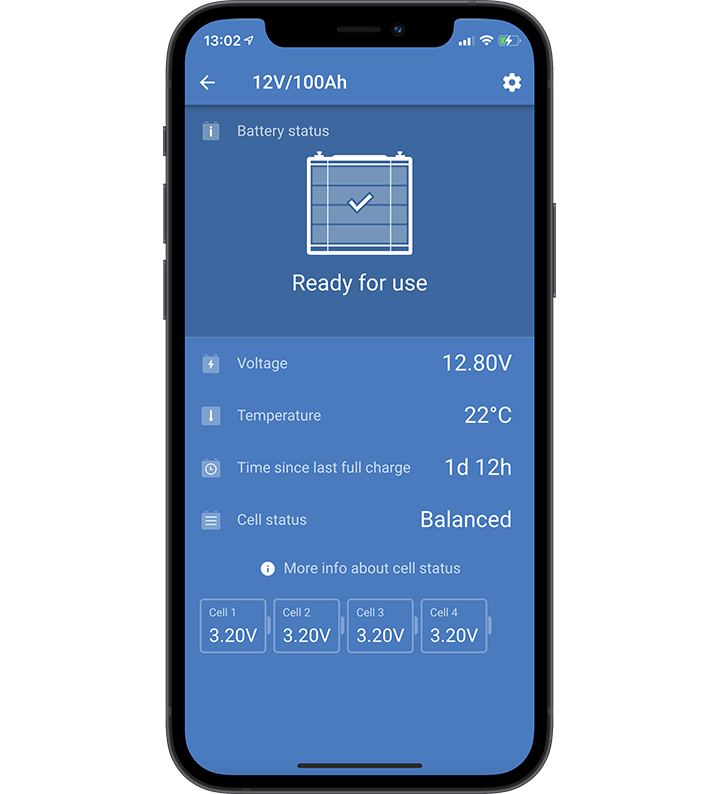
Bluetooth
With Bluetooth cell voltages, temperature and alarm status can be monitored.
Very useful to localize a (potential) problem, such as cell imbalance.
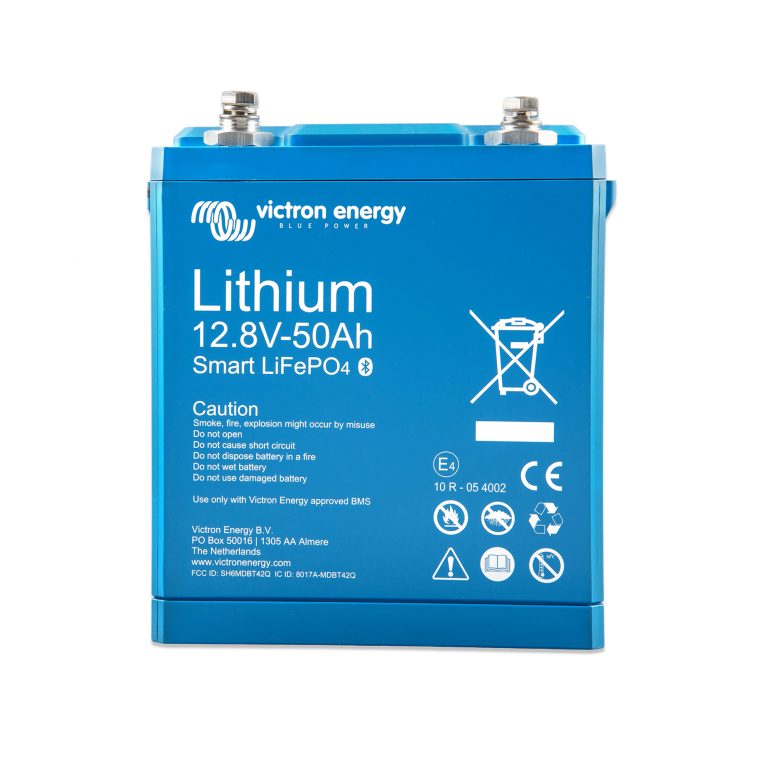
LiFePO4 battery 12,8V/50Ah – Smart
Lithium-iron-phosphate (LiFePO4 or LFP) is the safest of the mainstream li-ion battery types. The nominal
voltage of a LFP cell is 3,2V (lead-acid: 2V/cell). A 12,8V LFP battery therefore consists of 4 cells connected in
series.
Rugged
A lead-acid battery will fail prematurely due to sulfation:
• If it operates in deficit mode during long periods of time (i.e. if the battery is rarely, or never at all,
fully charged).
• If it is left partially charged or worse, fully discharged (yacht or mobile home during wintertime).
A LFP battery does not need to be fully charged. Service life even slightly improves in case of partial charge
instead of a full charge. This is a major advantage of LFP compared to lead-acid.
Other advantages are the wide operating temperature range, excellent cycling performance, low internal
resistance and high efficiency . LFP is therefore the chemistry of choice for very demanding applications.
Efficient
In several applications (especially off-grid solar and/or wind), energy efficiency can be of crucial importance.
The round trip energy efficiency (discharge from 100% to 0% and back to 100% charged) of the average leadacid battery is 80%.
The round trip energy efficiency of a LFP battery is 92%.
The charge process of lead-acid batteries becomes particularly inefficient when the 80% state of charge has
been reached, resulting in efficiencies of 50% or even less in solar systems where several days of reserve energy is required (battery operating in 70% to 100% charged state).
In contrast, a LFP battery will still achieve 90% efficiency under shallow discharge conditions.
Size and weight
Saves up to 70% in space
Saves up to 70% in weight
Expensive?
LFP batteries are expensive when compared to lead-acid. But in demanding applications, the high initial cost will be more than compensated by longer service life, superior reliability and excellent efficiency.
Bluetooth
With Bluetooth cell voltages, temperature and alarm status can be monitored.
Very useful to localize a (potential) problem, such as cell imbalance.
12V/265Ah Gel Deep Cycle Batt.
The GEL model range offers best deep cycle durability and overall longer life. The use of high purity materials and lead calcium grids ensure that for both AGM and GEL products have particularly low self-discharge so that they will not go flat during long periods without charge. Both ranges are supplied with M8 drilled, flat copper terminals ensuring best possible connection contact and eliminating the need for battery terminals. The batteries are compliant with both CE and UL specifications in ABS fireproof containers and come with Victron’s 2 year world-wide warranty.